
Bhutan's most famous monastery clings to a cliff 900 m above the Paro valley. Here is how the hike works, how fit you need to be and how to make the most of the day.
In this article
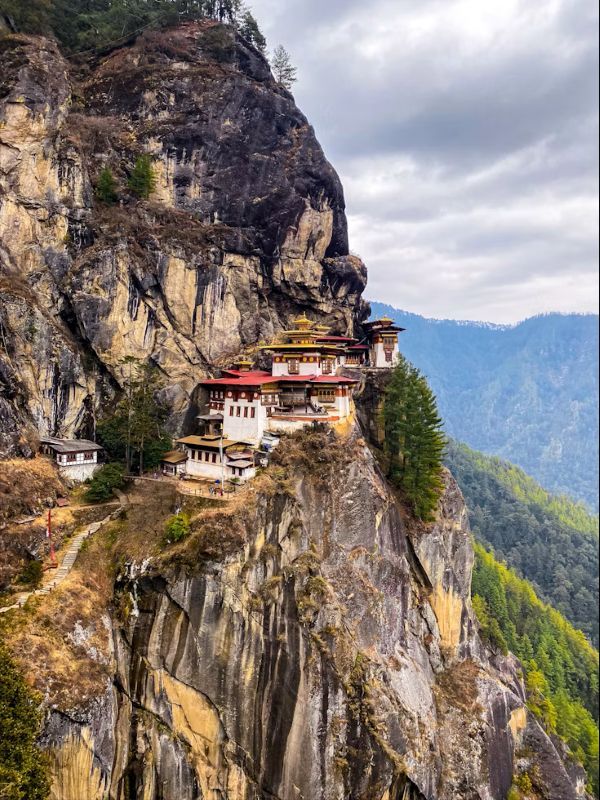
Few sights in the Himalaya are as unforgettable as your first glimpse of Paro Taktsang - the Tiger's Nest - its white walls and golden roofs clinging to a sheer granite cliff some 900 metres above the Paro valley. Reaching it on foot is the highlight of almost every trip to Bhutan, and it is well within reach of most reasonably fit travellers.
The Legend of the Tiger's Nest
According to legend, Guru Rinpoche - who brought Buddhism to Bhutan in the 8th century - flew to this cliff on the back of a tigress and meditated in a cave here to subdue a local demon. The monastery was built around that cave in 1692. It was badly damaged by fire in 1998 and carefully restored, reopening in 2005.
The Trail, Step by Step
Trailhead to the cafeteria
The hike begins in a pine forest at the base of the mountain, about 20 minutes' drive from Paro town. A wide, dusty path zig-zags steadily upward past prayer wheels and fluttering prayer flags. After roughly an hour to an hour and a half you reach the cafeteria, the halfway point, with a superb view across to the monastery and a welcome cup of tea.
Cafeteria to the viewpoint
The climb continues to a ridge almost level with the monastery. This is the classic photo spot, with Taktsang seemingly floating on the cliff face directly opposite.
The final steps
The last section is a staircase of around 700 steps - first down into the gorge, past a waterfall and a small shrine, and then back up to the monastery gate. It is the most tiring part of the day, but also the most dramatic.
Inside the Monastery
Bags, cameras and phones are left in lockers at the entrance - photography is not permitted inside. Your guide will lead you through the temples, including the cave where Guru Rinpoche meditated. Dress respectfully, with long sleeves and full-length trousers or skirts.
How Fit Do You Need to Be?
The hike is steady rather than technical. If you can walk for three hours on hilly ground with regular breaks, you will manage. Take it slowly, drink water and do not hesitate to rest - there is no prize for speed.
When to Go
Spring (March to May) and autumn (September to November) bring the clearest skies. Start early - around 7 or 8 am - to enjoy cool air and quieter trails, and schedule the hike towards the end of your Bhutan trip, once you are used to the altitude.
What to Wear and Carry
- Good walking shoes with grip - the path is dusty and slippery when wet
- Layers: it is cool in the forest and warm in the sun
- A long-sleeved shirt and full-length trousers for the monastery
- Water, a light snack, sunscreen and a hat
- A walking stick - sold cheaply at the trailhead and genuinely useful on the descent
Our Paro & Tiger's Nest tour builds in time to acclimatise in Thimphu before the hike, with a licensed Bhutanese guide throughout.

Nepal Trip Holiday Travel Desk
The same team that plans and operates our tours across Nepal, India and Bhutan. Questions about this guide? Call or WhatsApp us on +91 63071 02408 - we are happy to help.


