Everything you need to plan a comfortable Muktinath Yatra - how to reach the temple at 3,710 m, when to go, how to handle the altitude and what to pack.
In this article
High in the Mustang district of Nepal, at 3,710 metres, Muktinath is one of the most sacred places of pilgrimage in the Himalaya. For Hindus it is Mukti Kshetra, the place of liberation, and one of the 108 Divya Desams of Lord Vishnu. For Buddhists it is Chumig Gyatsa, the "hundred waters", where Guru Rinpoche is said to have meditated. The journey is as memorable as the darshan itself.
Why Muktinath Is So Special
Behind the pagoda-style temple, water flows from 108 spouts shaped like cow heads - the Muktidhara. Pilgrims bathe under each one before dipping in the two holy kunds in front of the shrine. Nearby, the small Jwala Mai temple shelters a natural flame that burns from the ground beside a trickle of water, a sight revered by Hindus and Buddhists alike.
Many pilgrims also collect Shaligram stones - ammonite fossils found in the Kali Gandaki river and worshipped as a form of Lord Vishnu.
How to Reach Muktinath
By air: Pokhara to Jomsom
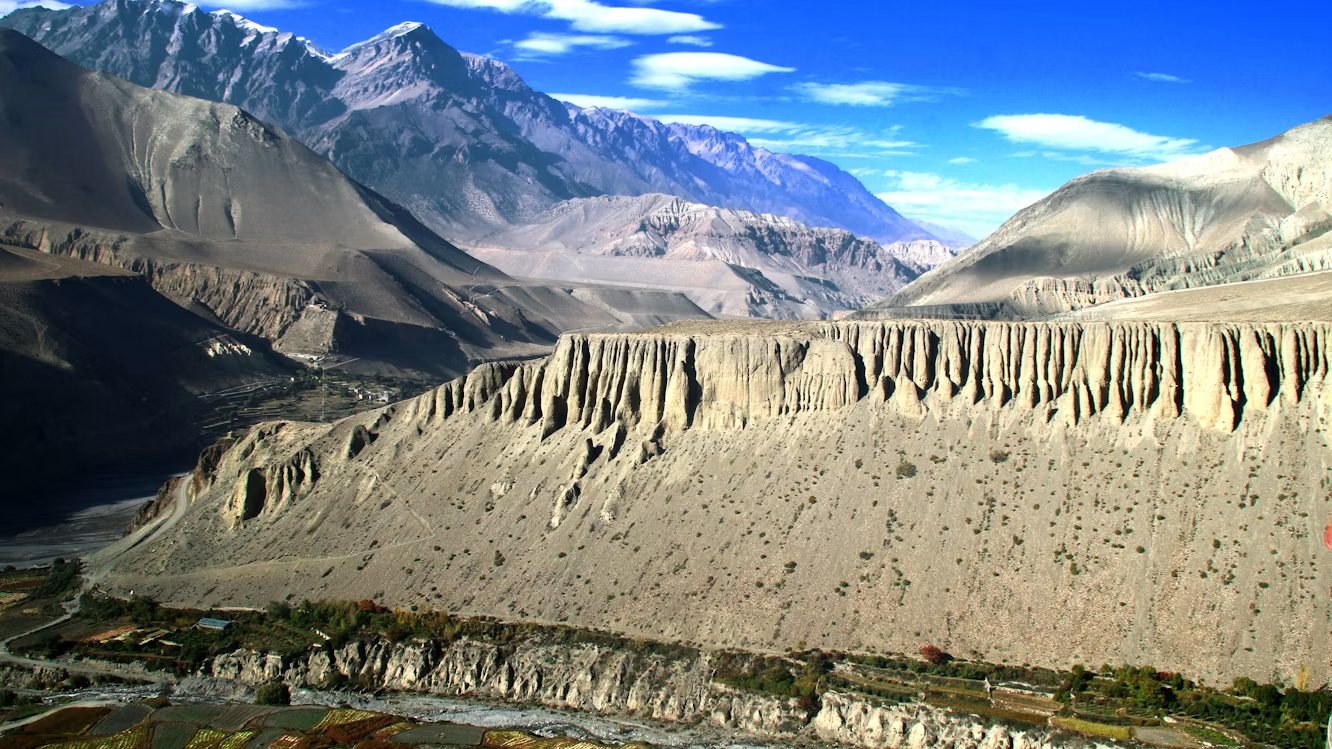
The quickest route is a 20-minute flight from Pokhara to Jomsom through the deepest gorge on earth, between the Annapurna and Dhaulagiri massifs. Flights operate only in the morning, because strong winds pick up in the valley after about 11 am, so keep a buffer day in your plan in case of weather delays.
By road
Jeeps and buses run from Pokhara via Beni and Tatopani to Jomsom in about eight to ten hours. The road is rough in places but spectacular, and it is the best option when flights are cancelled.
From Jomsom, a jeep takes around an hour and a half to reach Muktinath, passing the medieval village of Kagbeni. The last stretch to the temple is a short uphill walk; ponies and bikes are available for those who need them.
Altitude: How to Stay Comfortable
At 3,710 m the air holds noticeably less oxygen, and many visitors feel a mild headache or breathlessness. A few simple habits make a big difference:
- Ascend gradually - an overnight in Jomsom or Kagbeni before the temple visit is ideal.
- Walk slowly, drink plenty of water and avoid alcohol.
- Eat light, warm meals; garlic soup is a local favourite.
- Senior citizens and anyone with heart or lung conditions should consult their doctor before travelling.
Best Time for the Yatra
March to June and September to November bring the most reliable flights and clear skies. December to February is very cold, with snow at the temple, while the monsoon (July - August) can delay flights and block roads, although the upper Mustang valley itself receives little rain.
What to Pack
- Warm jacket, thermal inner wear, cap and gloves - even in May
- Sunglasses and strong sunscreen (the sun is intense at altitude)
- A change of clothes and a small towel for the holy bath
- Comfortable walking shoes and a torch
- Personal medicines and enough cash - ATMs are limited beyond Jomsom
A Suggested 7-Day Plan
- Arrive in Kathmandu - Pashupatinath darshan
- Kathmandu sightseeing - Boudhanath and Swayambhunath
- Drive or fly to Pokhara
- Morning flight to Jomsom, afternoon in Kagbeni
- Muktinath darshan, return to Jomsom
- Fly back to Pokhara, visit the lakeside
- Return to Kathmandu and depart
This is exactly the route of our Muktinath Yatra package, with hotels, flights, permits and an experienced guide arranged for you.

Nepal Trip Holiday Travel Desk
The same team that plans and operates our tours across Nepal, India and Bhutan. Questions about this guide? Call or WhatsApp us on +91 63071 02408 - we are happy to help.